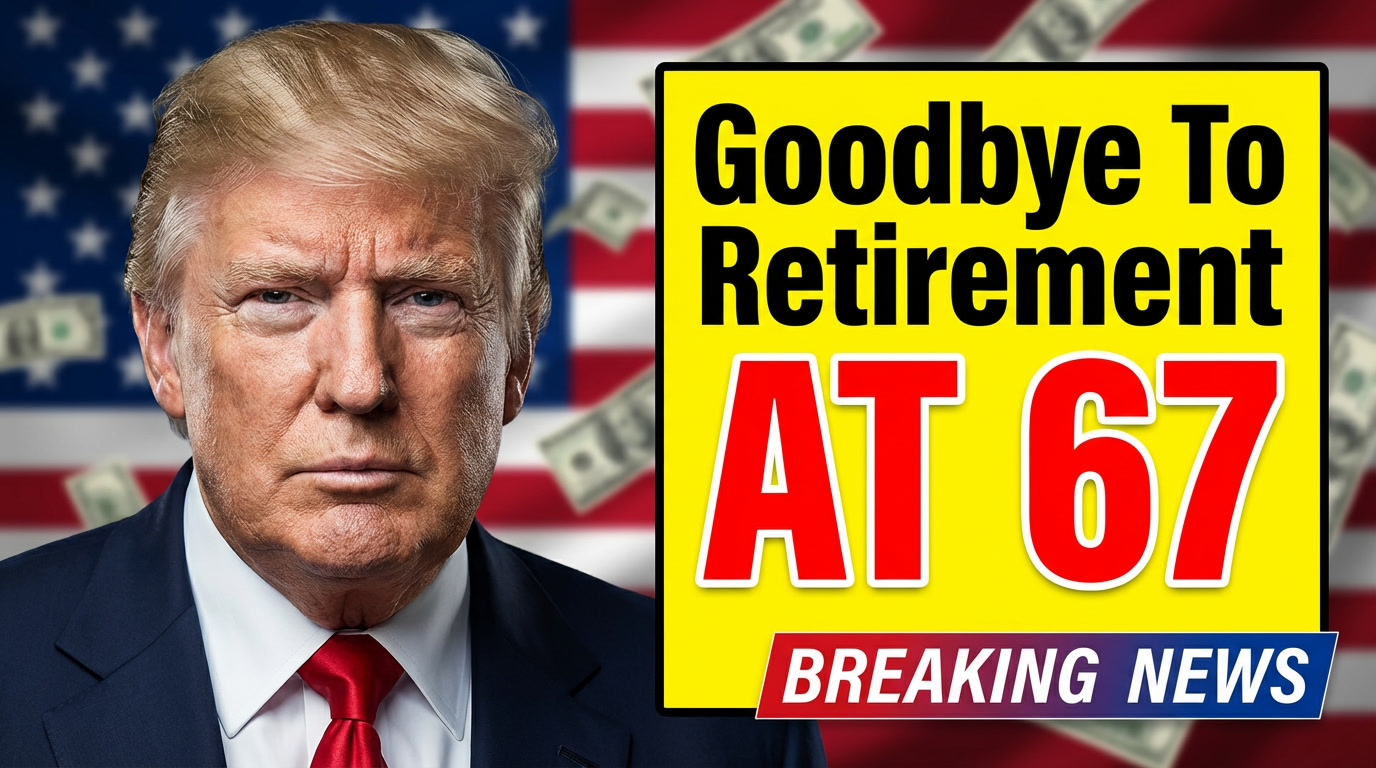
It’s the kind of headline that makes every working American pause mid-scroll: “Retirement age could soon rise above 67.” For millions of people inching toward that magic number, this isn’t just another policy debate—it’s a seismic shift in what retirement could look like for the next generation. And it’s not just talk anymore; Washington is seriously eyeing changes to Social Security’s “full retirement age” (FRA), and the implications are huge.
The Slow March Toward a Later Retirement
If you think 67 already felt like a long way off, brace yourself. The Social Security Administration (SSA) currently defines full retirement age as 67 for anyone born in 1960 or later. But lawmakers, facing the harsh math of an aging population and a financially strained trust fund, are debating whether that number should rise even higher—possibly to 68, 69, or even 70 over the coming decades.

Why the shift? The short answer: longevity and insolvency. Americans are living longer, collecting benefits for more years, while fewer younger workers are paying into the system. According to the latest Social Security Trustees Report (SSA.gov), the trust fund could run short by 2033, forcing an automatic 20–25% cut in benefits if Congress does nothing. Raising the retirement age is one of the few politically “manageable” levers left on the table.
But here’s the catch: just because people can live longer doesn’t mean they can work longer. That’s where the fairness debate heats up.
The Generational Divide: Boomers vs. Gen Z
This proposed shift hits differently depending on your age. Baby boomers, many already retired or close to it, might dodge the bullet. Gen X and Millennials? They’re in the danger zone. And Gen Z—well, they may be looking at a “retirement age” that starts to sound more like a second career phase.
A recent Gallup poll found that 77% of Americans under 40 don’t expect Social Security to be there in full when they retire. That’s not pessimism—it’s pragmatism. Younger generations have grown up watching government gridlock over entitlement programs, and they’re increasingly planning as if Social Security is a bonus, not a guarantee.
“Raising the retirement age might balance the math, but it punishes workers in physically demanding jobs,” says Teresa Ghilarducci, a labor economist at The New School. “You can’t ask a construction worker to stay on the job until 70 and call that fair policy.”
The Financial Ripple Effect
If the age increase becomes law, it would quietly shift trillions of dollars in lifetime benefits away from future retirees. To illustrate:
| Birth Year | Current Full Retirement Age | Proposed New FRA | Average Benefit Reduction* |
|---|---|---|---|
| 1960 | 67 | 68 | 6–7% |
| 1975 | 67 | 69 | 12–14% |
| 1990 | 67 | 70 | 20%+ |
*Based on average monthly benefits of $1,900 and current SSA formulas.
For someone expecting $2,000 a month at 67, even a two-year delay means losing tens of thousands in benefits—or working extra years to avoid early-claim penalties.
Policy Alternatives on the Table
Raising the retirement age isn’t the only option. Economists and lawmakers have floated a few other fixes:
- Lift the payroll tax cap — Right now, only income up to $168,600 (as of 2024) is taxed for Social Security. Removing or raising that cap would make high earners contribute more.
- Adjust cost-of-living formulas — The COLA (Cost-of-Living Adjustment) could be calculated using a “chained CPI,” which grows more slowly than the current method, saving billions annually.
- Tax investment income — A more controversial option: apply Social Security taxes to certain forms of passive income for top earners.
- Means testing benefits — Reduce payouts for wealthier retirees to preserve funds for middle- and lower-income groups.
Each of these ideas comes with political baggage, but a combination might soften the blow of a higher retirement age.
What This Means for Your Wallet
If you’re in your 40s or younger, the message is clear: plan for less from Uncle Sam. That doesn’t mean panic—it means being proactive.
- Max out your 401(k) or Roth IRA contributions while you can.
- Factor in delayed benefits when modeling your retirement income.
- Use tools like the SSA Retirement Estimator to see how different claiming ages affect your monthly payout.
And maybe—just maybe—start thinking of retirement less as a hard stop and more as a gradual slowdown. Many Americans are already “phased retiring,” shifting to part-time work in their 60s instead of a full exit.
The Political Reality
Don’t expect any sweeping change overnight. Moving the full retirement age requires an act of Congress, and with a presidential election looming, few politicians want to be the one tied to “raising the retirement age.” Still, expect serious discussion post-2026, when Social Security’s funding shortfall becomes impossible to ignore.
Ironically, both parties agree on one thing: doing nothing will hurt everyone more than making gradual changes now.
Fact Check
- Is the retirement age already changing? Not yet. The FRA remains 67 for those born in 1960 or later.
- Is Social Security running out of money? The 2024 Trustees Report confirms the trust fund will deplete by 2033 without reforms, but benefits wouldn’t disappear entirely—about 77% would still be payable.
- Can Congress fix it without raising the age? Yes, through tax adjustments or benefit recalculations, but those measures face heavy political resistance.
FAQ:
When was the retirement age last raised?
The Social Security retirement age gradually increased from 65 to 67 as part of the 1983 reforms signed by President Reagan.
Will current retirees be affected by future changes?
Unlikely. Historically, reforms apply to future beneficiaries, not those already collecting benefits.
What happens if the trust fund runs dry?
Social Security would still pay benefits from ongoing payroll taxes—just smaller ones, around 75–80% of current levels.